AI and Workplace Mental Health: Stress vs Support
How does AI affect mental health in the workplace?
AI can meaningfully impact workplace mental health by changing how work is assigned, measured, and evaluated. When AI tools boost speed and accuracy, they can reduce cognitive load and free up time for higher-value tasks. But when they’re introduced without clear expectations, they may also increase stress—especially if employees feel constantly monitored, rushed by automation-driven benchmarks, or unsure how their role will evolve.
Ways AI can increase stress and anxiety
One common pressure point is uncertainty. If teams aren’t told how AI will affect staffing, responsibilities, or performance reviews, people may assume the worst and experience ongoing worry. Another issue is “always-on” productivity: AI can accelerate workflows, which sometimes leads to higher output expectations without additional support, increasing burnout risk. Some workplaces also use AI-based tracking (like activity scoring or automated QA), which can feel like surveillance and contribute to tension, sleep disruption, or reduced morale.
Ways AI can support mental well-being
Used thoughtfully, AI can improve mental health by removing repetitive work, assisting with planning, and reducing decision fatigue. For example, AI can summarize long documents, triage tickets, draft routine communications, and help managers spot workload imbalances earlier. When employees have more autonomy over AI tools—and clear boundaries for after-hours use—AI can become a buffer against overload rather than a source of pressure.
What employees and leaders can do
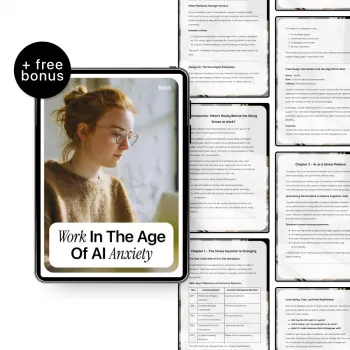
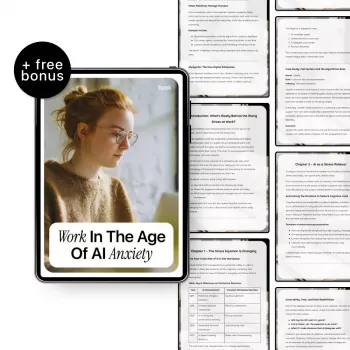
Healthy AI adoption comes down to transparency, fairness, and control. Leaders can reduce anxiety by explaining why AI is being implemented, what data is collected, and how (or whether) AI influences evaluations. Employees benefit from practical guardrails: setting notification limits, using AI to batch routine tasks, and clarifying priorities with managers when AI increases throughput expectations. For more detailed signs and fixes—especially around AI anxiety and burnout—see this guide to AI anxiety at work.
FAQ
How can you reduce AI-related stress at work?
Ask for clarity on how AI outputs are used, set boundaries for after-hours availability, and use AI to offload repetitive tasks instead of expanding your workload. If monitoring is involved, request transparency on what’s tracked and how it affects performance reviews.











Leave a comment