Oval Glass Vessel Sink + Waterfall Faucet: Modern Upgrade
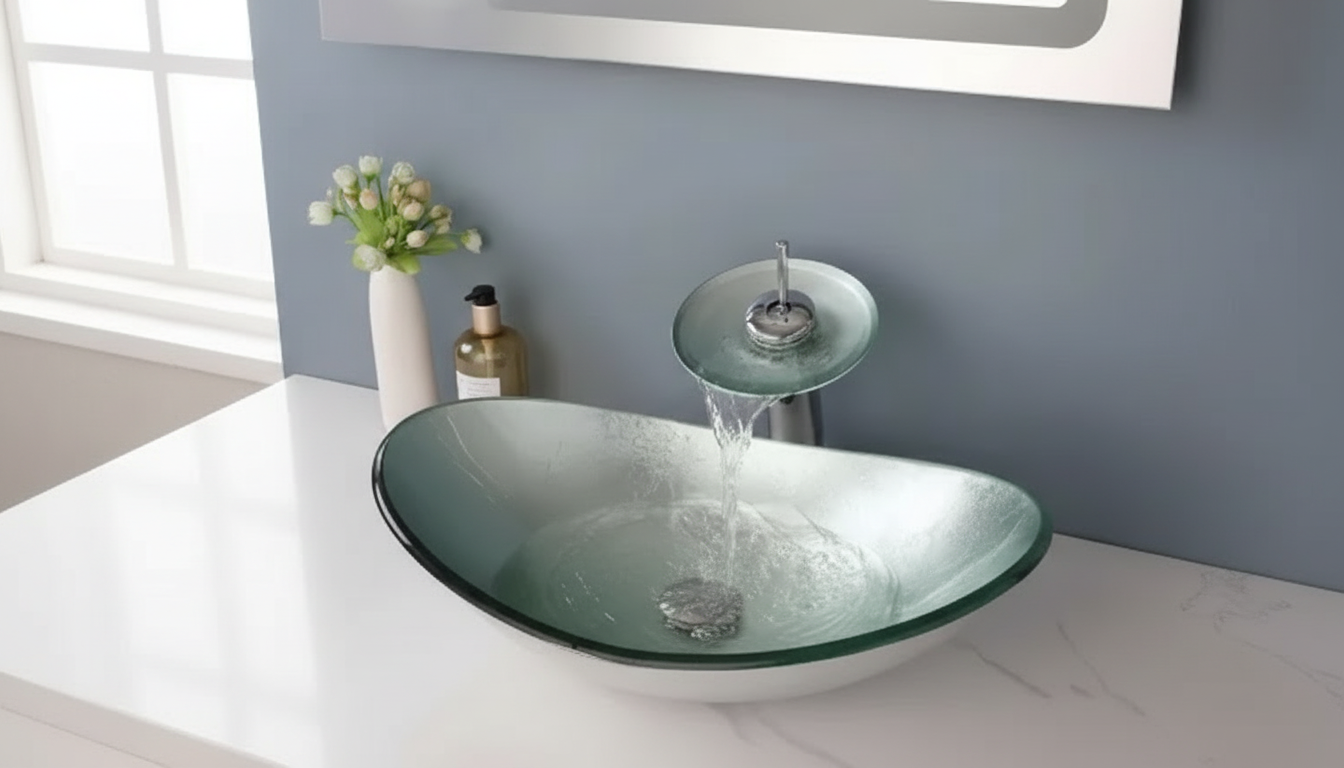
Elegant Oval Glass Sink and Waterfall Faucet Set – Stylish Bathroom Upgrade
An oval glass vessel sink paired with a waterfall faucet brings a clean, modern focal point to a vanity while keeping daily use practical. The “above-counter” bowl adds instant visual interest, and the wide, laminar-style stream reads spa-like—especially in powder rooms and boutique-feel primary baths. The key is choosing a set with the right proportions, compatible drain details, and finishes that coordinate with the rest of the bathroom hardware.
What Makes a Glass Vessel Sink and Waterfall Faucet Stand Out
A vessel sink changes the visual weight of a bathroom because the bowl sits on top of the counter rather than dropping into it. Glass, in particular, keeps the look light and reflective while still feeling intentionally designed.
- Creates an above-counter centerpiece that can refresh a vanity without a full remodel
- Waterfall spouts deliver a wide, sheet-like stream that feels contemporary and calming
- Pairs naturally with minimalist vanities, stone tops, and warm wood finishes for contrast
- Performs best when faucet height and spout reach match the bowl depth and drain location
Style and Finish Pairings That Look Intentional
Glass sinks look most polished when the faucet finish matches other visible metal elements—mirror frames, drawer pulls, lighting accents, and towel bars. Clear glass leans airy and modern, while tinted or textured bowls add depth and can slightly disguise spotting between wipe-downs.
Because waterfall faucets often have a bold, squared profile, keep nearby décor simple so the sink area reads as a deliberate focal point rather than visual clutter. In smaller bathrooms, minimizing countertop accessories helps the set look “designed,” not crowded.
Quick pairing guide for a cohesive vanity look
| Bathroom style | Vanity/countertop pairing | Best-matching hardware finishes |
|---|---|---|
| Modern minimal | Solid-color vanity + white/gray quartz | Matte black, brushed nickel |
| Warm contemporary | Wood vanity + light stone | Brushed gold, champagne bronze |
| Industrial | Concrete-look top + dark cabinetry | Matte black, gunmetal |
| Transitional | Shaker vanity + marble-look top | Polished chrome, brushed nickel |
Everyday Performance: What to Expect From a Waterfall Faucet
Waterfall faucets are chosen as much for the visual as for the function. The stream is wider than a typical aerated faucet, and the “sheet” effect is most even when the outlet stays clean and free of mineral buildup.
- The flow is wide and visually appealing, but splashing can happen if the spout is too high or the bowl is too shallow
- The best setup drops water near the center of the drain area rather than onto a steep sidewall
- Aeration differs from standard faucets; a quick wipe helps keep the spout lip crisp and clear
- If efficiency matters, check the rated flow (gpm) and local requirements; EPA WaterSense is a helpful reference point for bathroom faucet performance expectations
For a deeper dive into faucet efficiency and what gpm ratings typically mean in real use, see EPA WaterSense — Bathroom Faucet Information.
Sizing and Compatibility Checks Before Buying
Vessel sets look simple on the counter, but the fit details matter. A few measurements and compatibility checks can prevent the most common frustrations—awkward hand clearance, off-center streams, and drain mismatches.
- Countertop space: confirm the sink footprint still leaves room for soap and daily items
- Faucet fit: confirm the faucet is designed for vessel height and that the spout reach lands water inside the bowl
- Drain compatibility: many glass vessel sinks have no overflow; match the drain type accordingly
- Shutoff valves and supply lines: verify cabinet clearance for connections and the P-trap
Pre-install checklist (measure first)
| Item to verify | Why it matters | What to confirm |
|---|---|---|
| Faucet height | Prevents awkward handwashing and splashing | Spout clears rim comfortably |
| Spout reach | Keeps the stream centered | Water lands near the drain |
| Drain type | Avoids leaks and fit issues | With or without overflow matched correctly |
| Counter thickness | Affects mounting | Hardware fits through countertop |
| Cabinet clearance | Avoids interference | Trap and lines fit without bending |
Installation Overview: Vessel Sink + Faucet Set
Most installs go smoothly when everything is dry-fit first and sealed only after alignment is confirmed. Because glass is rigid and can be stressed by uneven contact, leveling and stable placement matter.
If the bathroom is intended to be more accessible, clearances around the sink and the approach space may matter as much as style. Refer to ADA Standards for Accessible Design (2010) for general guidance.
Care and Cleaning for Glass Sinks and Waterfall Spouts
For shoppers comparing materials and safety standards in plumbing components, NSF/ANSI 372 — Lead Content in Plumbing Components is a useful reference when evaluating compliant products.
Who This Set Suits Best
Product Snapshot and What’s Included
- Unlocking Savings Secrets — Master Your Deal Hunting Routine (in stock)
- Outlet Secrets: How to Score the Best Deals on Amazon (in stock)
FAQ
Do waterfall faucets splash more than standard faucets?
They can, but splash is mostly about setup: spout height, spout reach, bowl depth, and where the water hits. Aim the stream toward the center near the drain and choose a vessel-height faucet matched to the sink’s dimensions to reduce splash.
How should a glass vessel sink be cleaned without scratching?
Use a soft microfiber cloth and a non-abrasive cleaner, then dry the surface to prevent spots. Avoid scouring powders and rough pads, and descale periodically in hard-water areas to keep the glass and waterfall outlet clear.
Do vessel sinks require a special drain?
Many vessel sinks use a standard lavatory drain opening, but you must match the drain type to the sink (with overflow vs without overflow) and seal it properly. Confirm what comes with the set so you don’t need last-minute parts.









Leave a comment