Compact Cat Scratching Post: Small-Space Setup Tips
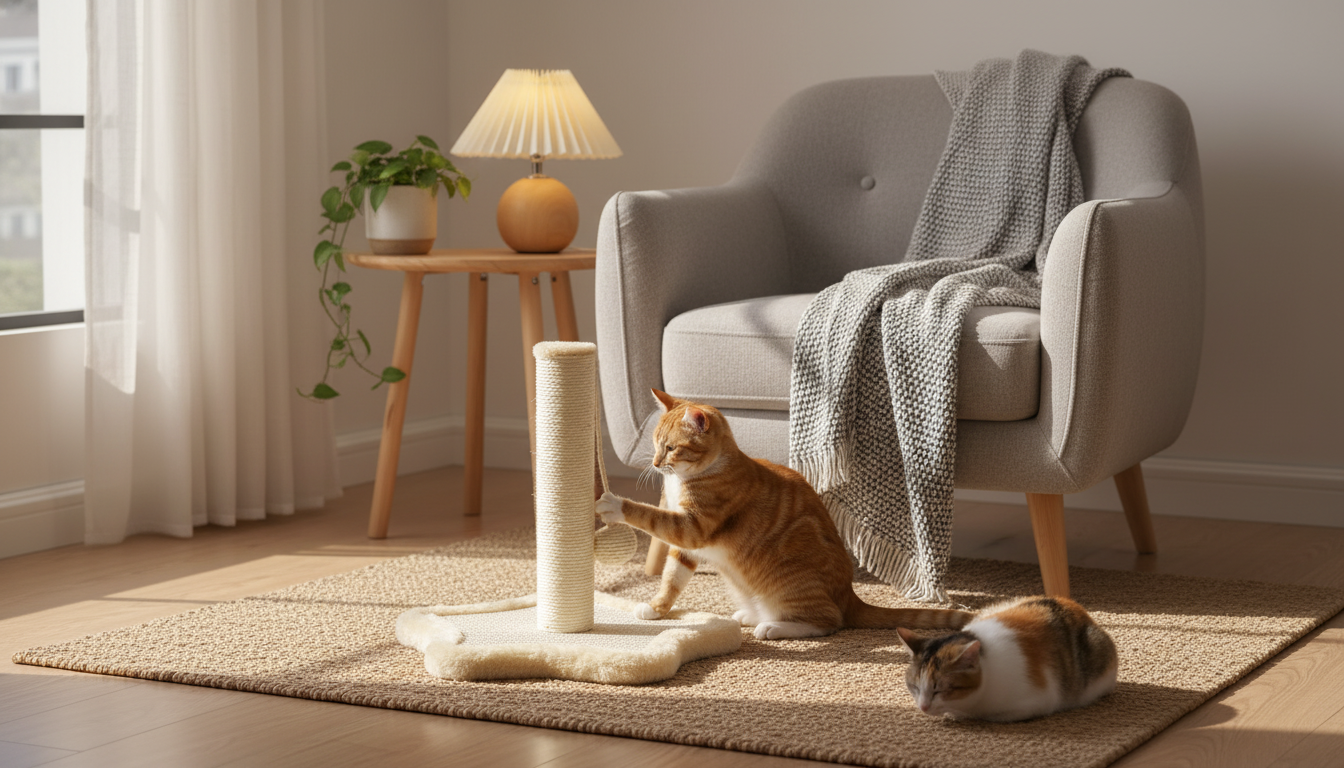
Compact Cat Scratching Post for Small Spaces: A Practical Setup Guide
A compact scratching post helps cats satisfy natural scratching needs without taking over the room. With the right stability, scratch material, and placement, even a small post can become the “default” spot your cat chooses daily—saving your sofa corners and keeping claw care on track.
Why a Small Scratching Post Still Matters
Scratching isn’t a bad habit to eliminate—it’s a normal behavior to direct. A compact post can do a surprisingly big job when it’s sturdy and placed where your cat already wants to scratch.
- Supports claw maintenance: Cats shed the outer layers of their claws by scratching, and a satisfying surface helps them do it safely.
- Protects furniture and flooring: A clear alternative reduces scratching on sofas, rugs, and door frames—especially when it’s placed right next to the “problem” area at first.
- Provides a comfort signal: Cats leave scent from glands in their paws, which can help them feel more secure in a space.
- Fits real life: Apartments, bedrooms, and tight corners often can’t accommodate large cat towers, but a small post can still support a daily routine.
It’s also worth remembering that scratching management is a cornerstone of humane cat care. The American Veterinary Medical Association (AVMA) guidance on declawing emphasizes that declawing isn’t a simple nail trim; offering appropriate scratching outlets is a key preventative strategy.
What to Look for in a Compact Scratching Post
Small-space doesn’t have to mean flimsy. The best compact posts focus on stability, texture, and build quality—so your cat feels confident leaning in and stretching out.
- Stable base: A wider, heavier base reduces tipping when a cat stretches, bounces, or jumps onto the post.
- Post height: Taller is usually better for adult cats because it allows a full-body stretch; shorter can work well for kittens or smaller cats.
- Scratch surface: Sisal (rope or fabric) is typically durable and distinct from household carpet. Carpet can be appealing, but in some homes it can blur the “okay vs. not okay” line.
- Edge finish and build quality: Smooth edges and tight wrapping help reduce snagging, shedding, and early wear.
- Footprint: Choose a size you can place near the cat’s favorite scratching zones (often near sleeping areas or entryways).
| Feature | Why it matters | What to aim for | Notes for this product |
|---|---|---|---|
| Base stability | Prevents tipping and keeps cats confident using it | Wide base and solid weight | See product page for base details |
| Scratch material | Affects durability and how much cats like it | Tightly wrapped sisal or durable scratch fabric | See product images/material details |
| Height | Encourages full stretch and repeat use | As tall as space allows; taller for adult cats | Dimensions not listed here—confirm on product page |
| Placement flexibility | Helps build a habit by placing it where cats already scratch | Fits corners, beside sofa, near cat routes | Compact footprint suited to small areas |
| Maintenance | Longer life and cleaner home | Easy to vacuum; replaceable/repairable wrap is a plus | Routine cleaning recommended |
Best Places to Put It (So Cats Actually Use It)
Placement does more than any “training trick.” The goal is to make the post the easiest, most obvious choice at the moments your cat already feels like scratching.
How to Encourage Scratching Without a Battle
For a deeper look at normal scratching behavior and how to work with it, International Cat Care offers practical guidance rooted in feline welfare.
Keeping It Safe, Stable, and Long-Lasting
- Check wobble weekly: Tighten screws or fasteners if anything loosens over time.
- Trim claws appropriately: Regular nail trims reduce snagging and help the scratching surface last longer. The ASPCA’s cat grooming tips cover safe claw care basics.
- Vacuum debris: Light, frequent vacuuming removes loose fibers and keeps the surface appealing.
- Rotate placement if interest drops: Moving the post a few feet—especially closer to a nap spot—can refresh engagement.
- Replace when it no longer grips: If the surface becomes slick, frayed, or bald, many cats will seek a better texture elsewhere.
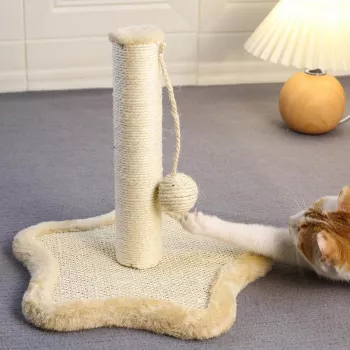
A Solid Pick for Small Rooms: Compact Cat Scratching Post
Purchase snapshot
| Item | Price | Availability | Link |
|---|---|---|---|
| Compact Cat Scratching Post | 25.67 USD | In stock | Compact Cat Scratching Post |
Small-Space Extras That Help the Setup Feel “Finished”
- Soft lighting for the corner: If your scratching post sits near a reading chair or entryway, an accent light can make the corner feel intentional instead of cluttered. Consider the Luxury Crystal Wall Lamp – Elegant Iron & Crystal Light for Living Spaces.
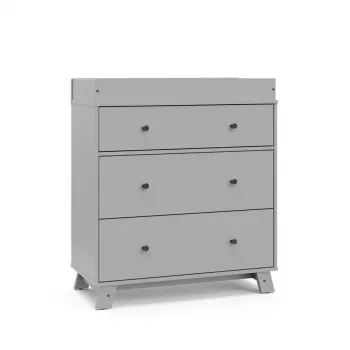
- Simple storage nearby: Keeping nail clippers, treats for rewards, and a lint roller in one spot makes it easier to stay consistent during the first week. A compact dresser can help organize supplies, such as the 3-Drawer Pebble Gray Nursery Dresser with Changing Top.
FAQ
How tall should a scratching post be for an adult cat?
Aim for a height that lets your cat stretch from paws through shoulders without crouching. If space allows, taller is usually better, but compact posts can still work well with excellent placement and quick rewards.
Why does my cat ignore a new scratching post?
The most common causes are poor location, a wobbly base, or a texture your cat doesn’t like. Move the post to a current scratching hotspot, add a cat attractant, and reward the first few scratches to build a routine.
Is sisal or carpet better for scratching posts?
Sisal is often more durable and clearly different from household carpet, which can help reduce confusion about what’s okay to scratch. Carpet can be very appealing to some cats, so if you’re unsure, offering two textures (vertical and horizontal) can reveal your cat’s preference quickly.









Leave a comment