5-Min Outdoor Workout Planner: Nature Fitness Checklist
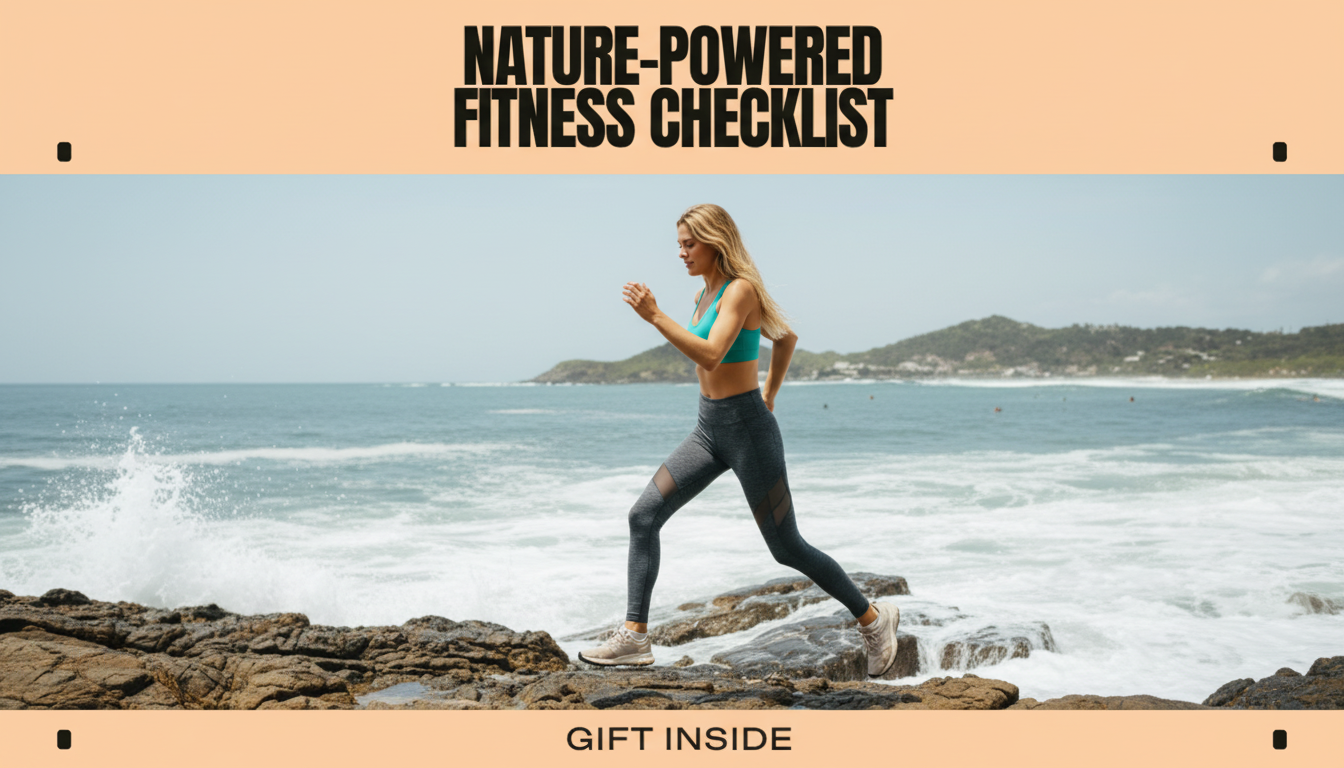
Nature-Powered Fitness Checklist: Outdoor Workout Planner & Daily Habit Tracker
Outdoor movement is easier to stick with when the plan is simple, repeatable, and built around real-life conditions like weather, time, and energy. A nature-powered checklist turns “I should go outside” into a quick daily decision: choose a route, pick a short workout, track recovery, and log the mental reset that comes from fresh air and natural light.
If you want a ready-to-use format you can print or save on your phone, the Nature-Powered Fitness Checklist – Outdoor Workout Planner & Daily Habit Tracker for Nature Based Fitness Benefits keeps the process straightforward: pick a session, check the boxes, and move on with your day.
What a nature-powered fitness checklist helps with
- Turns outdoor workouts into a clear routine with checkboxes for movement, hydration, and recovery
- Reduces decision fatigue by pre-planning a few go-to sessions (walk, hills, intervals, mobility)
- Creates consistent accountability without needing a complicated training plan
- Encourages variety (trail, park, beach, backyard) to keep motivation high
- Makes progress visible by tracking frequency, effort, mood, and sleep signals
Health guidelines consistently emphasize that regular physical activity matters more than “perfect” workouts. For a helpful baseline, see the CDC Physical Activity Basics and the American Heart Association recommendations for adults.
How to use the planner in 5 minutes a day
- Set a daily outdoor minimum: 10–20 minutes of movement counts (walk, easy cycle, mobility flow).
- Choose one focus: strength (bodyweight), cardio (steady pace), or skill (balance, agility, hiking technique).
- Pick a location that matches the day: low-traffic loop for speed, shaded trail for heat, flat path for recovery.
- Log effort simply: easy / moderate / hard, plus one note about mood or energy.
- Finish with recovery: water, a light stretch, and a quick breathing reset.
A checklist works best when it stays lightweight. The goal is to make “starting” almost automatic—then let the session be whatever you have capacity for that day.
Outdoor workouts to rotate through the week
- Steady walk or hike (20–60 minutes): builds aerobic base and supports daily consistency
- Hill repeats (10–25 minutes): short warm-up, 4–10 uphill efforts, walk-down recovery
- Park bench strength circuit (15–30 minutes): step-ups, incline push-ups, split squats, rows with a band
- Trail intervals (15–25 minutes): 30–60 seconds quicker pace, 60–120 seconds easy pace
- Mobility + nature stroll (15–30 minutes): hips, ankles, thoracic spine, then an easy walk to cool down
Sample weekly rotation (mix and match)
| Day | Session | Time | Effort | Checklist focus |
|---|---|---|---|---|
| Mon | Steady walk | 30 min | Easy | Consistency + steps |
| Tue | Bench strength circuit | 20 min | Moderate | Strength + form |
| Wed | Mobility + stroll | 25 min | Easy | Recovery + flexibility |
| Thu | Trail intervals | 20 min | Hard | Cardio + breathing |
| Fri | Easy hike | 40 min | Easy–Moderate | Time outdoors |
| Sat | Hill repeats | 20 min | Hard | Power + stamina |
| Sun | Gentle walk | 20 min | Easy | Reset + planning |
Daily habit tracker ideas that make outdoor fitness stick
- Trigger habit: link outdoors to an existing routine (after coffee, after lunch, after work).
- Gear shortcut: keep shoes, hat, and a light layer by the door to remove friction.
- Weather-proof plan: create A/B options (A = trail; B = neighborhood loop; C = porch mobility).
- Progress signals: track consistency streaks, not just intensity—especially on busy weeks.
- Mind-body check: include a quick “stress before / stress after” note to reinforce the payoff.
If walking is your most reliable option, a simple reference like NHS: Walking for health can help you stay focused on consistency and gradual progression.
Comfortable footwear reduces friction too. If you want a casual, everyday option for neighborhood loops and park walks, consider the Women’s Floral Print Casual Sneakers for easy grab-and-go outings.
Nature-based fitness benefits to track (beyond calories)
- Mood and stress: note calmness, mental clarity, or tension reduction after sessions
- Sleep quality: log bedtime consistency and sleep satisfaction on outdoor days
- Energy level: track afternoon slump vs. steady energy after morning daylight
- Recovery: soreness level and how quickly breathing returns to normal after effort
- Motivation: whether outdoor variety made the session feel easier to start
These signals are practical because they’re immediate. A workout that improves your mood and sleep tends to repeat itself—no extra willpower required.
What to include in an outdoor workout checklist
Simple checklist template (copy into a daily page)
| Category | Checkbox items |
|---|---|
| Prep | Shoes on • Water • Quick route pick |
| Warm-up | 5 min easy walk • Ankles/hips/shoulders |
| Main session | Walk/Hike • Intervals • Strength circuit • Mobility |
| Nature notes | Sunlight time • Weather • Favorite view |
| Recovery | Cool-down • Stretch • Protein/water |
| Daily score | Energy 1–5 • Mood 1–5 • Sleep note |
If you prefer an organized, ready-made version (instead of building your own from scratch), the Nature-Powered Fitness Checklist – Outdoor Workout Planner & Daily Habit Tracker for Nature Based Fitness Benefits is designed to keep the whole system on one consistent page: plan, do, recover, reflect.
A practical way to start today
FAQ
How long should an outdoor workout be to count as a good day?
For consistency, 10–20 minutes is a strong minimum—especially on busy days. When you have more time, extend to 30–60 minutes at an easy or moderate effort and prioritize feeling recovered enough to go again tomorrow.
What if the weather is bad or daylight is limited?
Use an A/B/C plan: A is your preferred route, B is a shorter neighborhood loop with layers and visibility gear, and C is a quick indoor/porch mobility session. Track the habit either way so “showing up” stays consistent even when conditions change.
How do you track progress with nature-based workouts?
Log frequency, perceived effort (easy/moderate/hard), and route difficulty (flat vs. hills) alongside well-being markers like mood and sleep. Over time, steady improvements in how you feel and how quickly you recover are just as meaningful as pace or distance.











Leave a comment