Realistic Phone Use Goals: A Simple 7-Day System
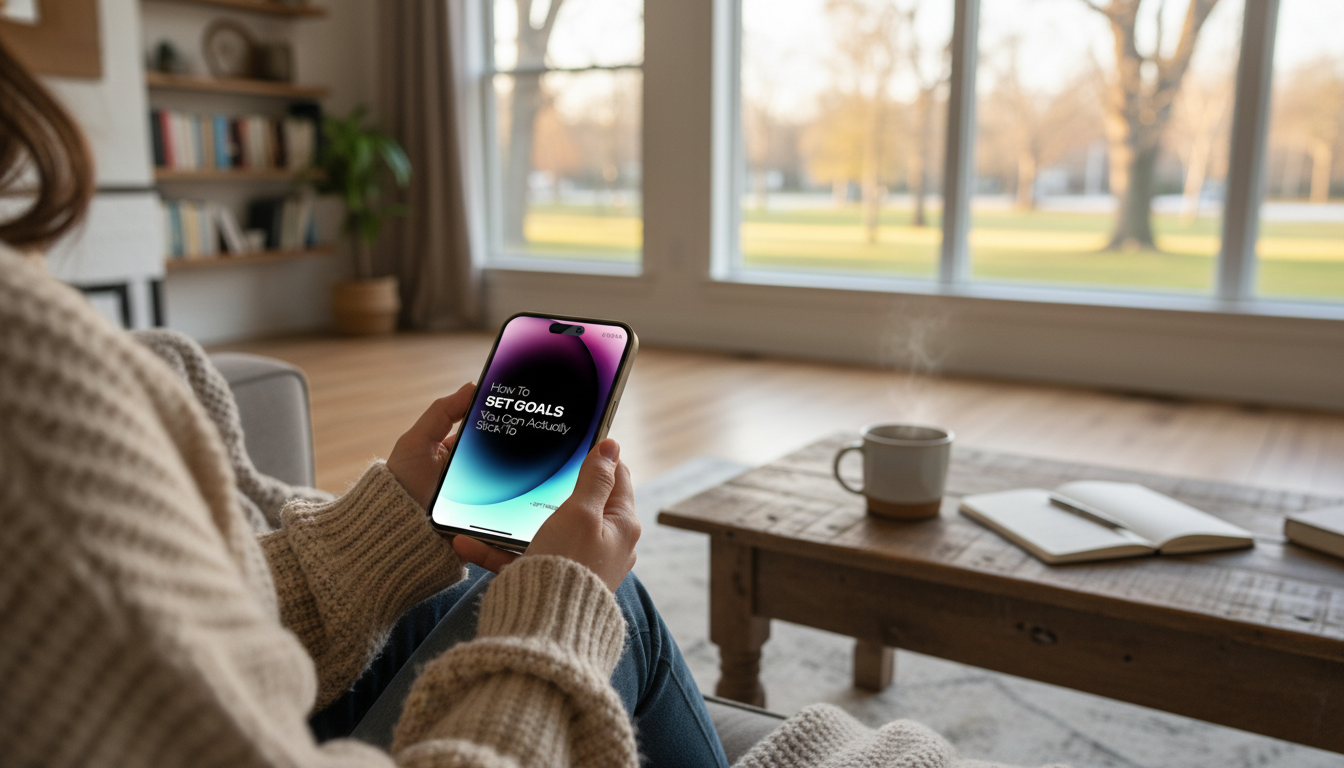
Phone habits change fastest when goals are realistic, measurable, and tied to everyday routines. A “perfect” plan that collapses on a busy Tuesday won’t help much—so this guide uses a practical sequence: measure what’s happening now, pick one goal that fits real life, add the right kind of friction, and track progress in a way that makes improvement feel doable.
Start with a baseline that reflects real life
Before cutting anything, get a clear snapshot of your current pattern across a typical week (workdays and weekends). On iPhone, you can review Screen Time to see daily averages and your most-used apps (Apple’s help page walks through the steps: Use Screen Time on iPhone).
Focus less on “controlling your whole day” and more on spotting high-risk moments—times when you tend to pick up your phone automatically: waking up, commuting, lunch breaks, or bedtime. Also separate necessary use (navigation, work chat, banking) from optional use (scrolling, autoplay videos). That keeps your target realistic and prevents a plan that fights your actual responsibilities.
Finish your baseline by writing a one-sentence reason for change that’s specific enough to matter. Examples: “I want to fall asleep faster,” “I want one uninterrupted hour of study,” or “I want to be more present during dinner with my kids.”
| Category | Current weekly pattern | When it happens most | Notes |
|---|---|---|---|
| Total screen time | ___ hours/day average | ___ | Include weekends |
| Social media | ___ min/day | ___ | Triggers: boredom, stress |
| Video/streaming | ___ min/day | ___ | Often extends bedtime |
| Messaging | ___ min/day | ___ | Work vs personal split |
| Games | ___ min/day | ___ | Watch for late-night sessions |
Pick one “keystone goal” instead of a complete phone detox
Big, vague rules (“I’m going to stop using my phone so much”) tend to fail because they don’t tell you what to do at decision time. Instead, pick one keystone goal—one change that creates a ripple effect. A few examples:
- No phone in bed
- App limits after 9 p.m.
- Notifications off for non-essential apps
- One daily phone-free focus block
Make it a minimum viable goal: small enough that you can still do it on your worst day. Define success in plain terms (minutes, times per day, or phone-free blocks), and set a short time horizon. A 7-day sprint is easier to commit to than an open-ended “forever” rule.
Make the goal easier with the right friction
Friction is anything that slows down a reflexive unlock. The point isn’t punishment—it’s creating a tiny pause where you can choose. Start with the exact moments you identified in your baseline.
- Reduce access in problem moments: move distracting apps off your home screen, log out, or delete and reinstall weekly.
- Change defaults: try grayscale, notification summaries, and scheduled Do Not Disturb.
- Create physical boundaries: charge the phone outside the bedroom; keep a simple alarm clock if that’s the sticking point.
- Prepare replacements: match the trigger precisely (stress → 2-minute walk; boredom → saved reading list; waiting → podcast).
If stress is a major driver, it helps to pair friction with a calming replacement. The American Psychological Association has practical stress resources worth browsing for ideas you can plug into your plan: APA — Stress.
Build a plan you can follow on your worst day
Most “failure” is predictable: travel weeks, deadlines, social events, or low moods. Decide your fallback rules ahead of time with simple if–then plans. This prevents the spiral of “I already broke it, so the day is ruined.”
- If–then planning: “If I have a late work night, then only essential messaging after 9 p.m.”
- 80/20 rule: keep the goal intact most days and plan a controlled flex day if you truly need it.
- Recovery protocol: pause, name the trigger, restart at the next planned block—no all-or-nothing thinking.
- Sleep guardrails: a consistent cutoff time often improves everything else.
If bedtime is your high-risk moment, you’re not imagining the pull—screens can interfere with sleep timing and wind-down. The National Sleep Foundation offers guidance on screen habits and sleep routines here: National Sleep Foundation.
Track progress with a simple scorecard (and rewards that don’t backfire)
Keep tracking lightweight. Measure one leading indicator (the behavior you control) and one lagging indicator (the outcome you want). For example:
- Leading indicator: phone-free blocks completed
- Lagging indicator: overall screen time trend or minutes in your top distracting app
Turn the system into a repeatable routine
Helpful picks to support your routine
- How to Set Goals You Can Actually Stick To: The Ultimate Guide to Setting Realistic Phone Use Goals (a step-by-step system with templates and checkpoints)
- Women’s Floral Print Casual Sneakers (an easy “replacement reward” idea: a short walk when you’d normally scroll)
- Luxury Crystal Wall Lamp – Elegant Iron & Crystal Light for Living Spaces (a simple environment cue: create a calmer wind-down zone that doesn’t revolve around your screen)
FAQ
What is a realistic screen time goal to start with?
Start from your current baseline and reduce optional use by 10–20% for week one, or set one boundary (like no phone in bed) before trying to cut hours. A small win you can repeat is more valuable than an aggressive target you can’t sustain.
How long does it take to build a new phone habit?
Consistency matters more than a specific number of days. A practical approach is a 2–4 week cycle with weekly reviews, tiny adjustments, and a minimum-viable version of your goal for tough days.
What should you do after you break your phone-use goal?
Pause and name what triggered the slip, then add or restore one friction point (like logging out or turning on Do Not Disturb) and restart at the next planned block. If it keeps happening, scale the goal down slightly so it’s realistic, then build back up.










Leave a comment