10-Inch Powered Subwoofer Guide: Placement & Tuning

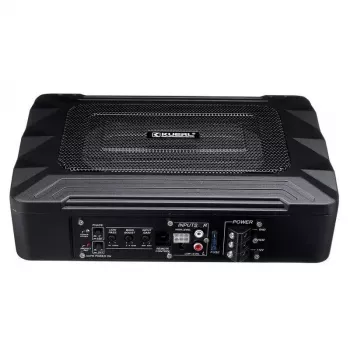
10 Inch High-Power Active Subwoofer: Deep Bass Without a Separate Amp
A 10-inch high-power active subwoofer combines the driver and built-in amplification in one unit, making it a practical way to add low-end impact to music, movies, and games while keeping the setup straightforward. This guide breaks down what to look for, how to place and tune it, and what to expect from a compact, powered bass upgrade.
What an Active Subwoofer Adds to a System
Even a solid pair of speakers can struggle to reproduce the lowest notes with authority. A powered subwoofer takes over that heavy lifting, which changes how your entire system feels and sounds.
- Extends low-frequency response so kick drums, bass lines, and cinematic effects sound fuller and more physical.
- Reduces strain on main speakers by handling the lowest notes, often improving overall clarity at higher volumes.
- Built-in amplifier simplifies matching power to the subwoofer driver and reduces extra equipment to buy and wire.
- A 10-inch driver often balances depth and speed, offering punchy bass without needing a very large enclosure.
Why 10 Inches Can Be the Sweet Spot
Driver size doesn’t tell the whole story, but 10 inches is a popular “do-it-all” option because it fits into real living spaces while still moving enough air to feel satisfying.
- Room-friendly size: easier to place than larger subs while still producing meaningful low-end weight.
- Musical tightness: 10-inch drivers commonly feel responsive for bass guitar and kick drum transients.
- Versatility: works well for apartments, bedrooms, living rooms, and compact entertainment areas when tuned properly.
- Output expectations: deep bass depends on enclosure design, amplifier capability, and room acoustics—not just driver size.
If you’re comparing options, it helps to remember that room gain (how your room reinforces bass) can make a well-placed 10-inch sub feel bigger than you’d expect—while a poorly placed larger sub can still sound uneven.
Key Features to Check Before Buying
The right controls and connections make the difference between “loud bass” and bass that blends naturally with your speakers.
- Controls: level (volume), crossover (low-pass), and phase (0/180 or variable) make integration far easier.
- Inputs: look for compatibility with the rest of the system (common options include line-level/RCA and speaker-level inputs).
- Auto on/standby: convenient power management for daily use.
- Enclosure build: rigid cabinetry reduces rattles; feet or isolation pads can help with boominess on hardwood floors.
- Protection features: clipping/overheat protection helps the sub stay reliable during long listening sessions.
| What to match | What to look for | Why it matters |
|---|---|---|
| Audio source/receiver output | Sub/LFE out or line-level output | Simplifies connection and provides proper signal level |
| Speaker type | Bookshelf vs tower vs soundbar | Helps set a sensible crossover and blend point |
| Room size and neighbors | Usable output at low volume, isolation options | Prevents complaints while keeping bass presence |
| Placement options | Corner/along wall/near cabinet | Affects perceived loudness and smoothness across seats |
Setup and Placement for Smoother Bass
Placement is “free performance.” Before touching any knobs, get the subwoofer into a location that supports even, controlled bass.
- Start with placement: corners often increase output but can create “boomy” peaks; along a wall can be smoother in many rooms.
- Use the “crawl” method: place the sub at the main seat, play bass-heavy content, then walk the room edges to find the most even-sounding spot.
- Avoid loose objects: shelves, picture frames, and cabinet doors can rattle—secure or add damping before blaming the sub.
- Isolation helps: rubber feet or a platform can reduce floor vibration and improve perceived tightness in some spaces.
For home theater layouts, Dolby’s speaker setup resources can help confirm general positioning principles, even before fine-tuning for your specific room acoustics: Dolby Speaker Setup Guides.
How to Dial In Crossover, Level, and Phase
Once the sub is in a good spot, tuning is about getting a seamless “handoff” between your speakers and the subwoofer—so bass sounds like it comes from the whole front stage, not a single box.
If you want a deeper dive into calibration concepts and best practices, CEDIA publishes consumer-facing education and industry guidance worth browsing: CEDIA resources.
Common Problems and Quick Fixes
Featured Options Available Now
- 10 Inch High-Power Active Subwoofer ($442.51) — a powered 10-inch option designed to bring deeper bass to entertainment setups with straightforward hookup and basic onboard tuning.
- Unlocking Savings Secrets — Master Your Deal Hunting Routine ($8.99) — a simple way to organize deal checks if you’re upgrading multiple audio pieces over time.
- Outlet Secrets: How to Score the Best Deals on Amazon ($6.99) — useful for stretching a budget on cables, isolation pads, or other small add-ons that help a subwoofer perform its best.
FAQ
What is the difference between an active subwoofer and a passive subwoofer?
An active subwoofer has a built-in amplifier (and usually onboard controls like level, crossover, and phase), so it’s designed to connect directly to a receiver or source output. A passive subwoofer requires an external amplifier, which adds complexity but can offer more flexibility in matching power and components.
Where should a 10-inch powered subwoofer be placed for the best bass?
Start by trying a corner for maximum output or along a wall for smoother response, then use the “subwoofer crawl” to find the spot that sounds most even at your main seat. Room acoustics dominate results, so the best location is the one that minimizes boominess and dead spots in your specific space.
What crossover setting should be used with bookshelf speakers?
A solid starting point is 80–100 Hz, with smaller bookshelf speakers often benefiting from the higher end of that range. Fine-tune by ear so the bass sounds seamless and non-directional, then adjust level and phase to lock in a clean blend.











Leave a comment