Resilience Micro-Habits for Hard Seasons (Daily Tools)
What resilience looks like in real life
Resilience is the set of skills that helps you stay steady when life isn’t. It doesn’t erase grief, uncertainty, or stress—it helps you move through them with more clarity and choice.
- Bouncing forward (not just “bouncing back”): adapting, learning, and carrying new strengths into what comes next.
- Emotional flexibility: feeling anxiety, sadness, or anger without letting those emotions make every decision.
- Problem-solving under stress: taking small, realistic actions even when motivation is low.
- Connection and support: letting relationships, community, and professional care multiply your capacity.
- Meaning-making: staying anchored in values so hardship doesn’t become your identity.
Start with a simple resilience baseline
When everything feels tangled, a quick baseline reduces overwhelm by turning “the mess” into workable pieces.
- Name the challenge clearly: What is happening right now? What’s controllable? What isn’t?
- Spot your “stress signature”: Notice patterns like sleep shifts, irritability, scrolling/avoidance, shutdown, overworking, or snacking to cope.
- Rate key areas from 1–10: energy, focus, mood, support, routines, and self-talk—then pick just one to improve first.
- Set a “minimum viable day”: hydration, one nourishing meal, 10 minutes of movement, and one meaningful connection.
This baseline works best when it’s kind and realistic. The goal is traction, not perfection.
Build inner stability with micro-habits (when life feels heavy)
Micro-habits are small on purpose. They create stability without requiring you to “feel ready.” When repeated, they become evidence that you can act even while stressed.
- Try a 2-minute reset: inhale 4 seconds, exhale 6 seconds for 2 minutes to downshift your stress response.
- Create anchors: keep one consistent routine morning or evening (tea, stretch, journaling, a short walk).
- Practice “tiny exposure”: do the smallest next step you’ve been avoiding (open the email, schedule the appointment, outline one paragraph).
- Replace all-or-nothing with “good enough”: define what “done” looks like today, not in an ideal world.
- Track wins: write down one action you took despite difficulty; confidence grows from proof.
Resilience practice menu (choose 1–2 daily)
| Situation | 2–10 minute practice | Why it helps |
|---|---|---|
| Racing thoughts | Brain-dump 10 lines; circle 1 controllable step | Moves worry into a plan |
| Low motivation | Set a 5-minute timer; start the task; stop if needed | Reduces friction to begin |
| Emotional overwhelm | Name 3 emotions + where they show up in the body | Creates distance and clarity |
| Conflict or tension | Write a calm script: “When X happens, I feel Y, I need Z” | Improves communication under stress |
| Decision fatigue | List 3 options; pick the safest “next best” choice | Prevents paralysis |
Reframe adversity without dismissing it
Reframing works best when it’s built on honesty. If you skip validation, your mind often pushes back harder.
- Validate first: “This is hard.” “This hurts.” “This is not what I wanted.”
- Challenge unhelpful thoughts: swap “This ruins everything” with “This is a setback; I can take one step.”
- Use a “story vs. facts” check: separate what happened from the interpretation you’re adding.
- Look for controllable levers: skills to learn, boundaries to set, conversations to have, habits to adjust.
- Identify values: choose actions aligned with what matters (health, family, integrity, growth) even when outcomes are uncertain.
If you want evidence-based grounding, the American Psychological Association’s resilience resources and the Mayo Clinic’s overview of resilience skills both emphasize coping tools, connection, and realistic thinking.
Strengthen resilience through connection and boundaries
Resilience grows faster when you stop trying to carry everything alone—and when you protect the limited energy you have.
- Build a support map: 2 people for encouragement, 1 for practical help, 1 for honest feedback.
- Make the ask specific: “Can you check in Friday?” “Can you help me compare options?” “Can you watch the kids for 1 hour?”
- Set stress-protecting boundaries: limit draining conversations, reduce doomscrolling, and protect sleep windows.
- Use professional support when needed: therapy, coaching, medical care, or support groups can accelerate recovery and coping.
Boundaries aren’t punishments; they’re guardrails that keep you functional while you rebuild.
Turn setbacks into a personal growth plan
Once the intensity drops even slightly, shift from survival mode into a simple growth plan. The goal isn’t to “silver-line” pain—it’s to use what happened to guide what you strengthen next.
A guided option for structure and follow-through
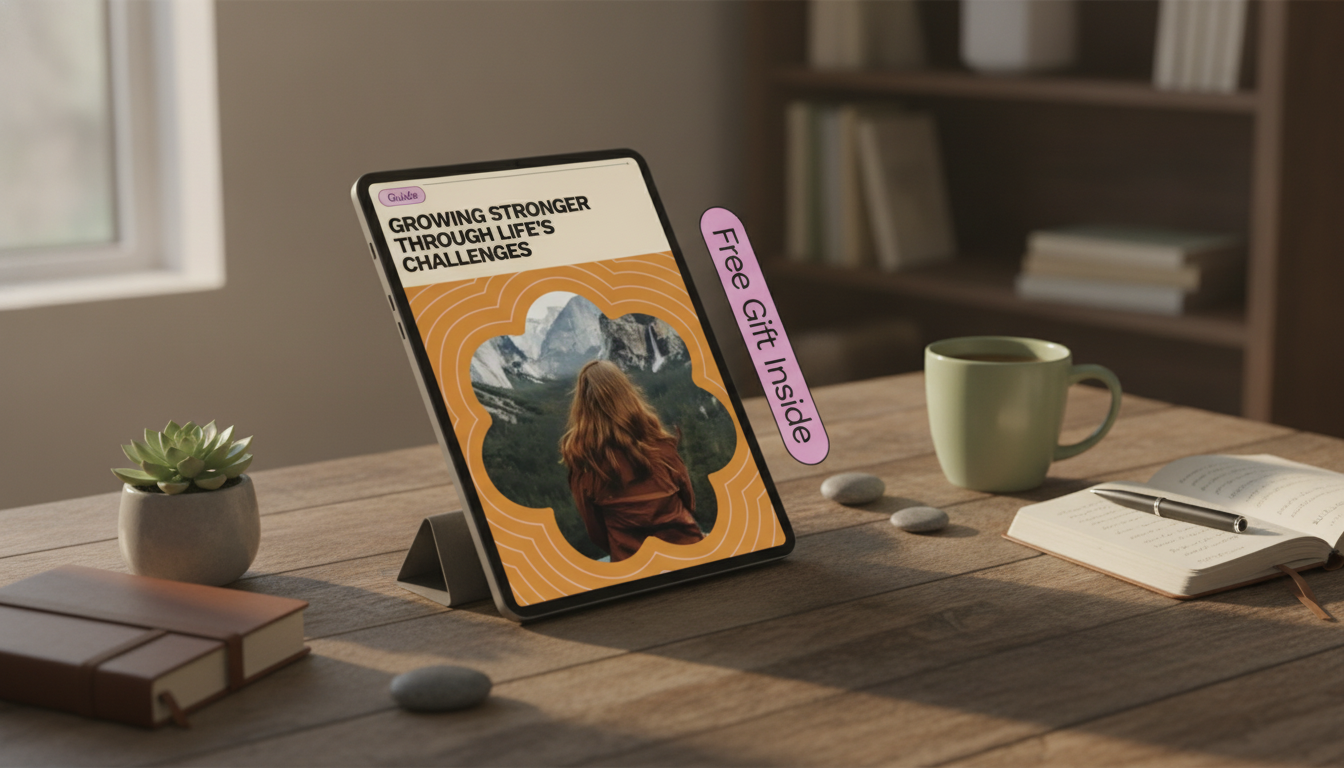
- Growing Stronger Through Life’s Challenges – Practical Resilience Guide (digital download) offers a practical way to revisit core tools, reflect, and track progress over time.
- For stress that’s driven by finances, routines can reduce uncertainty. Building a predictable “check-in” habit can help with steadier decision-making: Unlocking Savings Secrets — Master Your Deal Hunting Routine.
- If cutting costs is part of your stability plan, a focused guide can simplify your next steps and reduce decision fatigue: Outlet Secrets: How to Score the Best Deals on Amazon.
FAQ
How long does it take to build resilience?
Resilience builds through repeated practice. Many people notice small shifts within a few weeks of daily micro-habits, while deeper, more stable changes often develop over months depending on stress load, recovery time, and support.
What if motivation is gone and everything feels like too much?
Focus on minimum viable actions (hydration, food, a short walk, one message to a safe person) and reduce decisions with simple routines. If you’re experiencing persistent hopelessness, panic, or thoughts of self-harm, seek professional help right away.
Can resilience be learned after a major setback or trauma?
Yes—skills can be learned at any stage. Go slowly, prioritize safety, lean on trusted support, and consider evidence-based care (like trauma-informed therapy or support groups) to rebuild at a sustainable pace.









Leave a comment