Flower Cat Tree: Sisal Scratching Posts + Cozy Perch
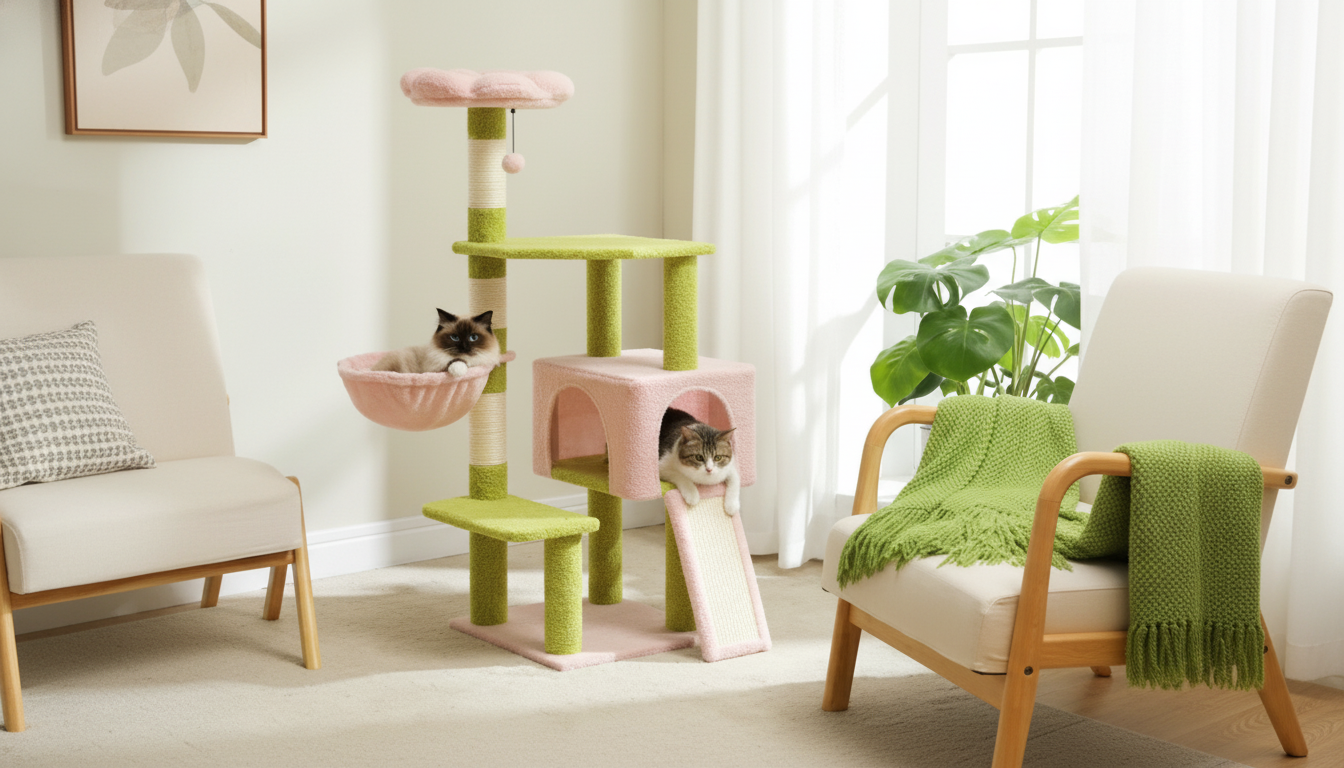
Flower Cat Tree with Sisal Scratching Posts & Flower Perch
A compact cat tree can make a big difference in a home—especially when it combines play, scratching, and lounging in one spot. The Flower Cat Tree with Sisal Scratching Posts & Flower Perch adds a cheerful floral look while supporting everyday feline needs: a satisfying scratch surface to help protect furniture, plus an elevated flower-shaped perch that encourages resting and room-watching.
Cats scratch to maintain their claws, stretch their bodies, and mark territory. Offering a dedicated place to do it (in the right location) is often the simplest way to reduce unwanted scratching on rugs, sofa arms, and door frames. For more on common cat behaviors and why they happen, see the ASPCA’s cat behavior tips and International Cat Care’s guide to scratching behaviour in cats.
What Makes the Flower Design Practical
The flower theme isn’t just cute—it can be functional for cats and convenient for small homes.
- Flower perch creates an elevated “lookout”: Many cats naturally seek height for security and curiosity. A perch gives them a place to climb up, settle in, and survey the room.
- Compact footprint: A smaller base is easier to fit into apartments, bedrooms, offices, or corners that can’t handle a bulky tower.
- Play-and-rest zoning in one area: When scratching and lounging are close together, cats can switch between activity and downtime without roaming to “find” the next best spot.
- Soft, playful style: Floral shapes can blend into brighter décor or a kid-friendly room without dominating the space visually.
Sisal Scratching Posts: Daily Claw Care and Furniture Protection
Sisal is popular on scratchers for a reason: it’s grippy, durable, and gives a resistance many cats enjoy. Scratching is part maintenance and part communication, so providing an appealing scratch surface is often more effective than trying to “stop” the behavior.
- Satisfying texture: Sisal tends to feel better under claws than many fabrics and can be more attractive than carpeting on stairs or rugs.
- Supports claw health: Regular scratching helps shed old claw layers, which may reduce snagging on upholstery and woven blankets.
- Different scratching styles: Cats vary—some do long, full-body stretch-scratches, while others do quick “drive-by” scratches. A stable post can accommodate both habits when placed correctly.
- Smart placement tip: Put the tree near the current “problem scratch” zone first. Once your cat consistently uses it, you can gradually shift it to your preferred location if needed.
Comfort and Stability: What to Look For Before Setting It Up
A cat tree works best when it feels safe. If it wobbles or sits on an uneven surface, many cats will avoid jumping onto it—or they’ll jump up once and decide it’s not worth repeating.
- Stable base: Set it on a level surface so it sits flat with no rocking. If your flooring is uneven, try a different spot or a firmer surface.
- Appropriate perch height: Confidence matters. Kittens and seniors often prefer lower, easier steps, while athletic adults may be comfortable with a bit more lift.
- Check hardware over time: After frequent climbing and scratching, fasteners can loosen. A quick monthly tighten helps prevent wobble.
- Extra security for big personalities: For larger cats or high-energy jumpers, placing the tree near a wall can add “psychological security” and reduce sideways movement during leaps.
Quick Specs and At-a-Glance Checklist
Before you commit to a spot, grab a tape measure and think about how your cat moves through the room. A few inches can be the difference between “ignored” and “favorite place.”
| Feature | Why it matters | What to verify at home |
|---|---|---|
| Sisal scratching posts | Redirects scratching and supports claw maintenance | Place within 3–6 ft of the cat’s favorite scratching spot |
| Flower perch | Adds a cozy lookout and nap zone | Confirm there’s a clear landing area for jumping up/down |
| Compact footprint | Fits smaller rooms and corners | Measure the intended spot; leave walking clearance around it |
| Stable base | Reduces tipping and increases confidence | Test for rocking; use a flat surface and tighten fasteners |
| Multi-activity use | Encourages play, stretch, and rest in one area | Add a toy nearby or catnip to boost early interest |
Best Placement for Fast Adoption
Where you place a cat tree can matter more than the design. Think “cat convenience” first, then adjust for aesthetics later.
- Near a window: Great for perching, bird-watching, and longer lounge sessions—especially for indoor cats.
- Beside a sofa arm or favorite chair: If furniture scratching is an issue, this is a prime replacement zone.
- In a calm corner: Reduces interruptions from foot traffic and can feel more secure for shy cats.
- Avoid loud appliances: If the area feels unpredictable (laundry machines, clanging vents), anxious cats may ignore the tree.
Helping a Cat Start Using the Tree
Care and Maintenance
Who It Suits Best
Shop In-Stock Picks
- Flower Cat Tree with Sisal Scratching Posts & Flower Perch
- Luxury Crystal Wall Lamp – Elegant Iron & Crystal Light for Living Spaces
FAQ
How do you get a cat to use a new scratching post and perch?
Place it near your cat’s current scratching area, reward any interaction right away, and use a favorite toy or a little catnip to draw attention. Keep the experience calm and consistent so the tree becomes the “easy yes” option.
Is sisal safe for cats to scratch?
Yes—sisal is commonly used for cat scratchers because it’s durable and satisfying to claw. Monitor for excessive chewing and trim frayed strands so long strings don’t become a hazard.
Where should a small cat tree be placed in an apartment?
Try near a window or next to your cat’s favorite resting/scratching spot, on a flat surface with clear jump space. Avoid noisy areas and tight pathways where foot traffic could startle your cat.








Leave a comment