AI Pet Behavior Decoder Checklist: Read Signals & Train
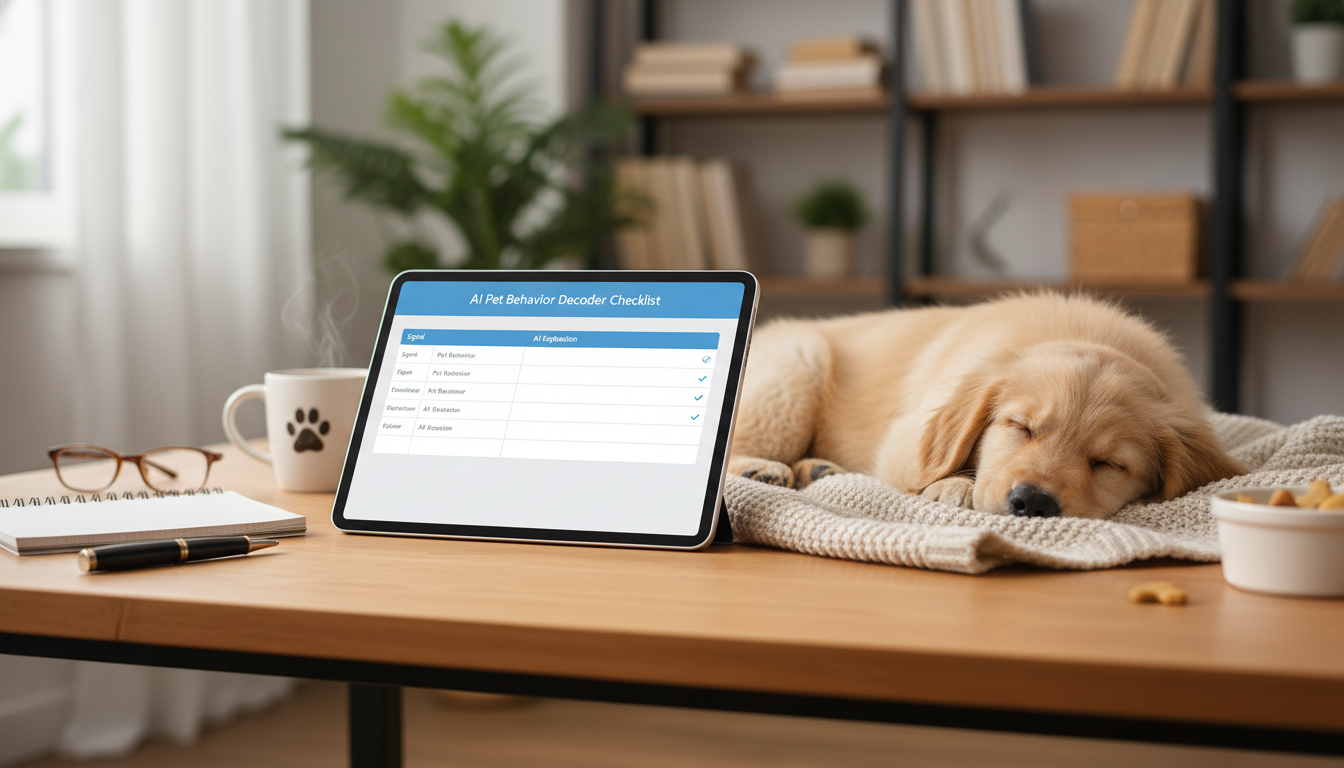
An AI-Powered Behavior Decoder Checklist for Pets: A Smarter Way to Read Body Language and Build Better Habits
Small changes in posture, tail position, ear movement, vocalization, or pacing can mean very different things depending on context. When signals look “confusing” or shift fast, it’s easy to respond in a way that accidentally increases stress—or reinforces a habit you don’t want. A structured behavior decoder checklist turns those moments into clear, repeatable observations so patterns show up sooner and calmer, safer responses become easier to choose.
Why behavior “signals” get misunderstood
Most behavior mix-ups happen because people try to interpret one cue in isolation. A wagging tail, a yawn, or a bark is rarely a complete message on its own.
- Single cues rarely tell the full story. Clusters of signals matter more than a single body-language detail, and context matters most (environment, time of day, recent triggers, and who was present).
- Stress and excitement can look similar. Pacing, whining, and “zoomies” may happen in both states. The difference often shows up in body softness and how quickly your pet recovers afterward.
- Human habits can reinforce unwanted behaviors. Talking, touching, or making eye contact during barking can become “attention rewards.” Inconsistent rules and unpredictable routines can also keep behaviors going.
- Medical issues can mimic behavior problems. Sudden house-soiling, new irritability, or abrupt reactivity deserves a health check before big training changes.
What a behavior decoder checklist does differently
A checklist shifts the goal from “guessing what it means” to “recording what happened and what worked.” That structure makes behavior easier to improve because it turns emotional moments into usable data.
- Repeatable notes. You log what happened right before, what your pet did, how long it lasted, and how it ended.
- Neutral descriptions over labels. “Barked for 30 seconds when doorbell rang” beats “stubborn” or “dominant,” which don’t guide action.
- Clear categories. It helps separate needs (sleep, potty, hunger), emotions (fear, frustration), and learned habits (reinforced patterns).
- A baseline you can measure. You can track changes week to week: frequency, intensity, duration, and recovery time.
- Better communication with pros. Consistent notes are easier to share with a veterinarian or trainer than relying on memory.
How to use the AI-powered checklist day to day
Short entries work better than long diaries. Aim for 30–90 seconds per log, especially right after a situation ends.
Quick decoding guide: common signals and what to check next
| Signal cluster | Often suggests | What to check in the checklist | Helpful first response |
|---|---|---|---|
| Yawning, lip-licking, turning head away | Stress or uncertainty | Crowding, forced greetings, loud rooms | Increase distance; lower demands; offer a calm station (mat/bed) |
| Stiff body, closed mouth, hard stare | High arousal; possible guarding or threat assessment | Access to toys/food/space; approach speed; cornering | Stop approach; add space; manage resources; seek professional guidance if repeated |
| Tail wagging with tense body | Arousal (not always friendly) | Face tension, posture stiffness, ability to disengage | Slow down greetings; allow choice; reward calm disengagement |
| Pacing, panting (not hot), scanning | Stress, anxiety, or overstimulation | Duration, noise triggers, confinement, separation | Reduce stimuli; provide enrichment; practice short calm separations if relevant |
| Sudden house-soiling or sudden reactivity | Possible medical contributor | Onset timing; pain signs; sleep disruption | Schedule a veterinary check before major training changes |
Smart tracking prompts that lead to clearer answers
Practical routines that pair well with a behavior checklist
When to involve a veterinarian or qualified behavior professional
Tracking is powerful, but safety and health come first. For dog-bite risk awareness and prevention tips, see the American Veterinary Medical Association (AVMA) guidance on dog bite prevention.
For training and behavior education, helpful starting points include the ASPCA dog behavior and training resources and the RSPCA guide to understanding dog behaviour.
Digital checklist features to look for
Behavior decoder checklist: a ready-to-use option
If you want a structured, guided format that’s easy to use in real time, An AI-Powered Behavior Decoder Checklist is designed to turn day-to-day observations into clearer next steps. It’s useful for common situations like greetings, barking, leash reactions, handling sensitivity, restlessness, and routine changes.
For a calmer decompression setup at home—especially if your logs show evening restlessness or overstimulation—soft, consistent lighting can help support a quiet “settle zone.” Consider the Luxury Crystal Wall Lamp – Elegant Iron & Crystal Light for Living Spaces to create a more predictable, low-chaos environment in a relaxation area.
FAQ
Can a checklist help with barking, chewing, or accidents in the house?
Yes—logging trigger, timing, and what happened immediately after often reveals whether the behavior is need-driven (potty, hunger), stress-driven (noise, separation), or reinforced (attention or access). Record the exact moment it starts, what your pet was doing right before, and how it ended; a solid first step is preventing rehearsal (manage access, increase supervision, and add a calm alternative like a mat settle).
Is an AI-based behavior guide a replacement for a veterinarian or trainer?
No. It supports observation and decision-making but doesn’t diagnose medical issues or replace hands-on behavior assessment; sudden aggression, bite incidents, extreme fear, self-injury, or abrupt personality change should be addressed by a veterinarian and/or qualified behavior professional. Logs make appointments more effective by providing specific examples, frequency, and recovery trends.
How long does it take to notice patterns using a behavior checklist?
Obvious triggers can show up in a few days if you log consistently, while broader trends often take about 2–3 weeks. Aim for several short entries per week and measure progress by reduced intensity, shorter duration, and faster recovery—not just whether the behavior disappears overnight.












Leave a comment